
Pond Edge Plants for Your Water Garden
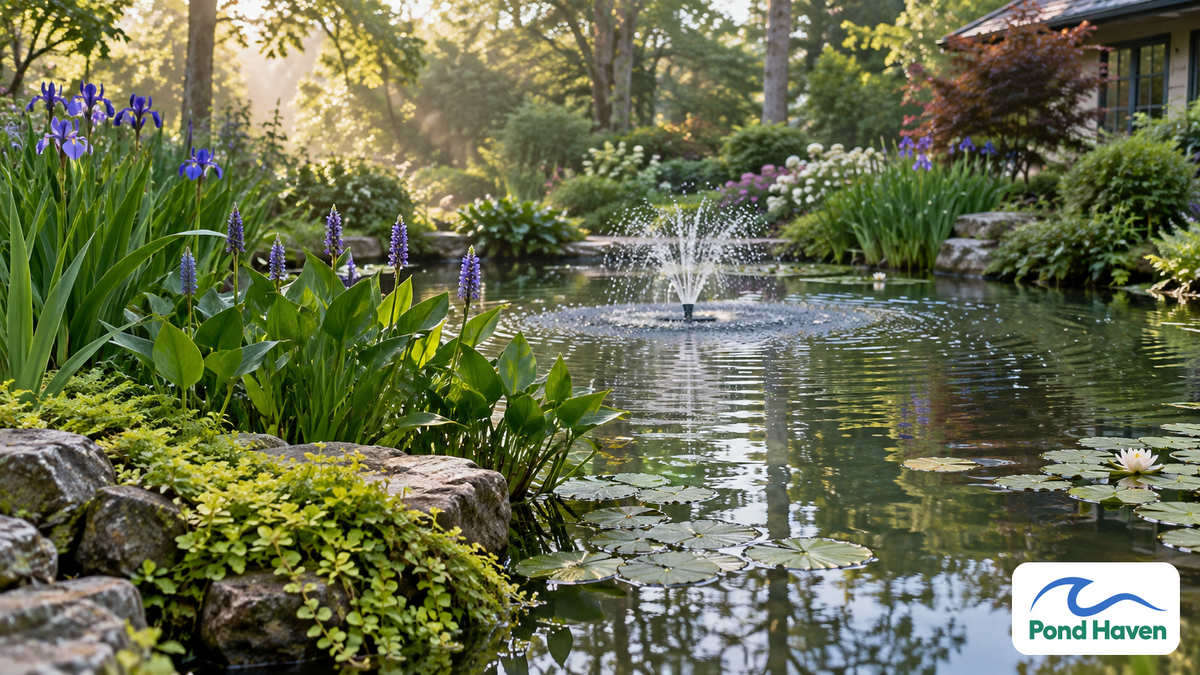

The pond edge is the first thing you see, and it is the most biologically active zone in your entire water garden. That narrow strip where water meets land filters your water, stabilizes your banks, gives fish and frogs a place to hide, and hides the ugly liner edge that screams "backyard kit" instead of "natural oasis."
But choosing the right pond edge plants is not as simple as picking what looks pretty at the nursery. Get the depth wrong, and your plants will sulk, fail to flower, or rot outright. Choose an aggressive spreader, and you will spend every summer fighting it. This guide breaks down the three distinct categories of edge plants, names specific species that work across most US zones, and gives you the exact planting depths each one needs to thrive.
- Pond edge plants fall into three categories: true marginals (roots submerged), bog plants (moist soil, never submerged), and shoreline ornamentals (wet-tolerant garden plants). Mixing them up is the most common planting mistake.
- Most marginals thrive with just 2 to 6 inches of water over the crown. Planting deeper than a species' maximum survival depth is the #1 killer of new plants.
- Plant aggressive spreaders like creeping Jenny and pickerelweed in aquatic baskets, never straight into gravel or soil where they can take over.
- Shoot for 40 to 60% total plant coverage of your pond's surface to starve algae of nutrients and keep water temperatures down.
- Never plant yellow flag iris or common cattail. Both are aggressive invaders that will choke your pond and escape into local wetlands.
What Are Pond Edge Plants?
Most guides lump every plant near water into one category. That is a mistake that leads to dead plants. Pond edge plants actually fall into three distinct groups, and each has different depth requirements.
True marginals (emergent plants) grow with their roots submerged in shallow water and their crowns at or just above the waterline. Think pickerelweed, arrowhead, and dwarf cattail. These are the plants that belong on the shallow shelves of your pond.
Bog plants need consistently moist soil but cannot tolerate standing water over their crowns. Marsh marigold and many irises fall here. They belong at the waterline, in saturated soil, or in a dedicated bog filter area.
Shoreline ornamentals are regular garden plants that tolerate wet feet but thrive in ordinary soil. Cardinal flower and many sedges fit this group. They grow on the damp bank above the waterline and help blend your pond into the surrounding landscape.
The distinction matters because it determines where each plant goes. Put a bog plant in 6 inches of water and it will rot. Put a true marginal in damp soil and it will struggle.
Maximum Survival Depth vs. Ideal Growing Depth
Here is the concept most guides miss. Every marginal plant has two depths: the maximum depth it can survive, and the ideal depth where it actually thrives.
A plant's maximum survival depth is the threshold beyond which it will not cope. Plant pickerelweed in 12 inches of water and it will survive, but it will be stunted and may never flower. Its ideal growing depth is 2 to 6 inches over the crown. That is where it puts on its best growth and heaviest bloom.
Always plant at the ideal depth, not the maximum. Exceeding the maximum stresses the plant and often leads to root rot. When in doubt, shallower is safer. You can always set a pot on a brick to raise it, but you cannot easily rescue a plant that has rotted.
Why Plant the Edge? The Functional Benefits
A planted edge is not decoration. It is the biological engine of your pond's health.
Nutrient uptake starves algae. Marginal roots pull nitrogen, ammonia, nitrates, and phosphorus out of the water. Those are the same nutrients that fuel algae blooms. Every root you add is a competitor removed from the algae's food supply. Diverse plantings work better than single species because different plants use different nutrient forms.
Roots stabilize your banks. On a sloped pond edge, root systems hold soil and liner in place against wave action and runoff. Pickerelweed in particular is increasingly used to stabilize retention ponds and natural banks against erosion.
Foliage shades and cools the water. Emergent leaves block sunlight, and shading can reduce water temperature by roughly 10°F. That matters in summer, when shallow ponds in full sun can overheat and stress your fish.
Plants provide cover and spawning habitat. Fish hide from predators among stems and floating leaves. Frogs lay eggs on foliage. Dragonflies and damselflies lay eggs on emergent stems near the water. A planted edge turns a sterile hole of water into a living ecosystem.
Foliage hides the liner edge. This is the aesthetic payoff. A band of plants that overhangs the edge by 6 to 12 inches visually erases the liner and blends the pond into your yard.

How to Choose: Popular Pond Edge Plants by Category
The species below are proven performers across most US hardiness zones. Each entry includes height, spread, hardiness range, ideal water depth, and whether it spreads aggressively.
Flowering Marginals (the Showpieces)
Pickerelweed (Pontederia cordata)
- Appearance: glossy, spear-shaped leaves and spikes of blue-purple flowers from early summer to fall
- Height: 24 to 30 inches
- Ideal water depth: 2 to 6 inches over the crown
- Hardiness: USDA zones 3 to 10
- Spread: moderate clumper; keep it in a basket to control growth
- Benefits: excellent pollinator plant; dragonflies lay eggs on the stems
Blue Flag Iris (Iris versicolor)
- Appearance: sword-like foliage and blue-purple flowers in late spring
- Height: 24 to 36 inches
- Ideal water depth: 0 to 4 inches; also grows in saturated soil
- Hardiness: zones 3 to 9
- Spread: moderate clumper
- Note: this is the native alternative to the invasive yellow flag iris. Plant the native.
Marsh Marigold (Caltha palustris)
- Appearance: glossy, rounded leaves and bright yellow flowers in early spring
- Height: 12 to 18 inches
- Ideal water depth: 0 to 2 inches; prefers bog conditions
- Hardiness: zones 3 to 7
- Spread: moderate clumper
- Note: one of the earliest spring bloomers. Deer avoid it due to bitter leaves.
Arrowhead / Duck Potato (Sagittaria latifolia)
- Appearance: arrow-shaped leaves and whorls of white flowers
- Height: 18 to 24 inches
- Ideal water depth: 2 to 6 inches
- Hardiness: zones 4 to 10
- Spread: moderate; spreads by tubers, so contain it in a basket
- Note: edible tubers were a Native American food staple
Grasses, Rushes, and Sedges (the Architectural Players)
Dwarf Cattail (Typha minima)
- Appearance: fine, grass-like foliage and small, rounded brown cattails
- Height: 18 to 24 inches
- Ideal water depth: 1 to 3 inches
- Hardiness: zones 3 to 9
- Spread: moderate clumper
- Why dwarf over common: common cattail (Typha latifolia) reaches 6 to 8 feet and spreads aggressively by rhizomes. Dwarf cattail gives you the look without the takeover.
Soft Rush (Juncus effusus)
- Appearance: upright, cylindrical green stems with no true leaves
- Height: 24 to 36 inches
- Ideal water depth: 0 to 3 inches
- Hardiness: zones 4 to 9
- Spread: moderate clumper
- Note: the 'Spiralis' cultivar has twisted, corkscrew stems that add real texture
Blue Rush (Juncus inflexus)
- Appearance: upright, blue-gray stems
- Height: 18 to 24 inches
- Ideal water depth: 0 to 2 inches
- Hardiness: zones 5 to 9
- Spread: moderate clumper
Ground-Hugging Spreaders and Foliage Plants
Water Celery (Oenanthe javanica)
- Appearance: parsley-like bright green foliage that spreads to form a mat
- Height: 6 to 12 inches
- Ideal water depth: 0 to 2 inches
- Hardiness: zones 5 to 11
- Spread: vigorous; keep it contained
- Note: the 'Flamingo' cultivar has pink and cream variegation
Creeping Jenny (Lysimachia nummularia)
- Appearance: round golden or green leaves on trailing stems
- Height: 2 to 4 inches
- Ideal water depth: 0 to 2 inches
- Hardiness: zones 3 to 9
- Spread: very vigorous; must be contained in a basket
- Note: excellent for softening hard edges and cascading over rocks
Water Hawthorne (Aponogeton distachyos)
- Appearance: floating oblong leaves and fragrant, forked white flowers
- Height: surface spread
- Ideal water depth: 6 to 18 inches
- Hardiness: zones 6 to 10
- Spread: moderate
- Note: technically a deeper marginal, but it works beautifully at the outer edge of a shelf
Planting Depth: The Critical Detail Most Guides Get Wrong
Depth is measured from the top of the pot or soil line to the water surface, not from the pond bottom. This confuses many new pond owners. A plant sitting on a 12-inch-deep shelf in a 6-inch pot has only 6 inches of water over its crown, which may be perfectly fine.
The table below gives ideal and maximum depths for the species listed above.
| Plant | Ideal Water Depth Over Crown | Max Survival Depth | Height | USDA Zones |
|---|---|---|---|---|
| Pickerelweed | 2-6 in | 12 in | 24-30 in | 3-10 |
| Blue Flag Iris | 0-4 in | 6 in | 24-36 in | 3-9 |
| Marsh Marigold | 0-2 in | 4 in | 12-18 in | 3-7 |
| Arrowhead | 2-6 in | 12 in | 18-24 in | 4-10 |
| Dwarf Cattail | 1-3 in | 6 in | 18-24 in | 3-9 |
| Soft Rush | 0-3 in | 6 in | 24-36 in | 4-9 |
| Blue Rush | 0-2 in | 6 in | 18-24 in | 5-9 |
| Water Celery | 0-2 in | 4 in | 6-12 in | 5-11 |
| Creeping Jenny | 0-2 in | 4 in | 2-4 in | 3-9 |
| Water Hawthorne | 6-18 in | 24 in | surface spread | 6-10 |
How to Plant Pond Edge Plants
Container Planting vs. Planting Straight into Gravel
For most backyard ponds, plant marginals in aquatic baskets rather than directly into gravel or soil on the shelf.
Aquatic baskets are the safer choice for most pond owners. They contain aggressive spreaders like creeping Jenny and pickerelweed, make division and seasonal rearrangement simple, and let you lift a plant out to adjust its depth without digging in the pond. Use an 8 to 11 inch mesh basket for most marginals, and step up to a 13 to 15 inch basket for vigorous growers. Line the basket with burlap or a mesh liner so soil does not wash out through the holes.
Direct planting into a gravel shelf or bog filter works only for larger ponds with dedicated planting zones. The trade-off is real: you lose the ability to control spread, division becomes a messy dig, and aggressive plants will run unchecked. Only plant directly where your liner is protected by a quality underlayment, because roots and gravel both stress liner materials over time.
Aquatic Baskets
- Contains aggressive spreaders like creeping Jenny and pickerelweed
- Makes division and seasonal rearrangement simple
- Lets you adjust depth by raising or lowering the pot
Direct Planting
- Harder to control spread; aggressive plants run unchecked
- Division requires digging in the pond
- Roots and gravel stress liner materials over time
Soil Requirements
Use heavy clay loam or a commercial aquatic planting media. Never use regular potting mix. Potting mixes contain perlite and vermiculite that float up and out of the basket, and chemical fertilizers that leach into your pond water and feed algae.
Top-dress every basket with a 1/2 to 1 inch layer of pea gravel. This holds the soil in place, keeps fish from digging in the basket, and gives the planting a finished look.
Step-by-Step Installation
- Choose a basket sized to the plant's mature spread.
- Line the basket with burlap or a mesh liner.
- Fill partially with aquatic soil.
- Position the plant so the crown sits just above the soil line.
- Backfill and firm the soil around the roots.
- Top with a 1/2 to 1 inch layer of pea gravel.
- Soak the basket thoroughly before placing it in the pond.
- Set the basket on a shelf or brick so the crown sits at the plant's ideal depth.
- Fine-tune the depth with cinder blocks or overturned pots under the basket.
Mid-spring to early summer is the window when water warms and plants establish fastest. Planting late in the season gives roots too little time to anchor before frost.

Designing a Natural-Looking Pond Edge
Layering by Depth
Think of your pond edge as three zones, each with its own plant community. This graduated approach looks natural and matches each plant's depth needs.
Zone 1 (0 to 2 inches of water): creeping Jenny, marsh marigold, water celery, blue flag iris. These low growers soften the very edge and cascade over rocks.
Zone 2 (2 to 6 inches of water): pickerelweed, arrowhead, dwarf cattail. These are the showpieces that provide vertical interest and summer color.
Zone 3 (6 to 12 inches of water): water hawthorne and deeper marginals. These fill the outer edge of the shelf and transition toward open water.
Design Principles That Work
Plant in odd numbers. Groups of 3, 5, or 7 look natural. Single plants look like accidents.
Vary the heights. Put tall grasses and rushes at the back or ends of a planting area, low spreaders at the front. This creates depth and keeps sight lines open across the water.
Stagger the bloom times. Combine spring bloomers like marsh marigold and blue flag iris with summer bloomers like pickerelweed and arrowhead. You get color from April through September instead of one burst.
Contrast textures. Pair fine-textured rushes with broad-leafed marginals. The contrast reads as intentional design rather than random planting.
Hide the liner, but leave gaps. Position plants so foliage overhangs the edge by 6 to 12 inches. But do not ring the entire pond. Leave open sight lines for viewing fish and for the water to reflect the sky.
Aim for 40 to 60% total plant coverage. This includes edge plants, floating plants, and submerged oxygenators. At this coverage level, plants outcompete algae for nutrients and keep the water shaded and cool.
Companion Planting for a Balanced Ecosystem
Edge plants do not work alone. Pair them with submerged oxygenators like anacharis or hornwort, which compete for the same nutrients and add oxygen to the water. Add floating plants like water lettuce where legal for shade. The goal is a complete plant community that naturally suppresses algae, so you rely less on chemical treatments.
Ongoing Care and Maintenance
Seasonal Tasks
Spring: Cut back dead foliage from last season before new growth emerges. Divide overcrowded clumps. Push aquatic plant fertilizer tabs into the soil at the base of each plant. Expect hardy plants to lag until late May; they emerge slower than tropicals.
Summer: Deadhead spent flowers to encourage rebloom. Thin aggressive spreaders monthly. Monitor water levels so crowns stay at their correct depth, especially after heavy rain or during drought.
Fall: Cut back dying foliage to 2 to 4 inches above the crown. Remove fallen leaves from the pond before they sink and decompose. Stop fertilizing after September 1.
Winter: See below.
Winterizing: Hardy vs. Tropical
Hardy marginals whose hardiness zone matches your region can stay in place. Cut the foliage back after the first hard frost and leave the pot on its shelf.
Tropical marginals must be treated as annuals or moved indoors. In cold climates, lift the pots and move them to a frost-free garage kept at 40 to 50°F, keeping the roots moist but not waterlogged.
In zones 5 and colder, consider moving hardy marginal pots to the deepest part of the pond, below the ice line, for winter. If your pond is not deep enough to prevent freezing solid, bring the pots indoors to a cool, dry place after dieback.
Controlling Aggressive Spreaders
Creeping Jenny, water celery, common cattail, and yellow flag iris all need vigilance. The strategies are simple: keep them in baskets, divide every 1 to 2 years, and cut back runners monthly during the growing season.
Divide in spring when new growth is 2 to 4 inches tall. Lift the basket, cut the root mass into 3 to 4 sections with a sharp knife, replant one section, and share or compost the rest. Division also reinvigorates tired clumps that have stopped flowering.
Plants to Avoid or Use with Caution
Yellow Flag Iris (Iris pseudacorus) is an aggressive spreader that chokes native wetlands. It is banned or restricted in several states. Do not plant it, even though nurseries still sell it. Choose native blue flag iris instead.
Common Cattail (Typha latifolia) reaches 6 to 8 feet and spreads rapidly by rhizomes. In a small pond it will take over within two seasons. Its aggressive roots can also damage liner materials. Choose dwarf cattail for the look without the invasion.
Water Hyacinth (Eichhornia crassipes), despite its popularity, is aggressive and can disrupt oxygen balance in your pond. It is banned in several states. Check local regulations before buying, and never let it escape into natural waterways.
Parrot's Feather (Myriophyllum aquaticum) is another aggressive spreader that outcompetes native flora. Avoid it.

Building the Right Edge Starts with the Right Foundation
Before you plant a single marginal, make sure your pond's edge is built to support them. Marginals need shallow shelves at the correct depths, and your liner needs to be protected from roots, gravel, and the constant moisture of the planting zone.
If you are building a new pond or renovating an existing one, choose a liner with the thickness and puncture resistance to handle edge planting. EPDM rubber at 0.75mm or thicker is the professional standard for garden ponds, and it stays flexible in cold weather where other liner materials turn brittle. Pair it with a geotextile underlayment to cushion against sharp rocks and aggressive roots. Browse our pond liners to match the right material to your pond's size and depth.
For new builds, a pond kit that includes the liner, underlayment, and pump sizing you need takes the guesswork out of the project. Getting the shelf depths right at the construction stage means your marginals will sit at their ideal depth from day one, instead of you wrestling with bricks and overturned pots to fine-tune every basket.
Frequently Asked Questions
How deep should the water be over marginal plant roots?
Most true marginals thrive with 2 to 6 inches of water over the crown, which is the point where stems meet roots. Bog plants like marsh marigold prefer 0 to 2 inches or just consistently moist soil. Measure from the top of the pot to the water surface, not from the pond bottom.
Can I plant pond edge plants directly into gravel?
You can, but it is rarely the best choice. Direct planting makes it hard to control aggressive spreaders like creeping Jenny and pickerelweed, and division becomes a messy dig. Aquatic baskets contain the roots, make seasonal rearrangement simple, and protect your liner from root damage.
What is the difference between a marginal plant and a bog plant?
A true marginal grows with its roots submerged in shallow water and its crown at or just above the waterline. A bog plant needs consistently moist soil but cannot tolerate standing water over its crown. Planting a bog plant too deep is one of the fastest ways to kill it.
How much of my pond should be covered with plants?
Aim for 40 to 60% total surface coverage combining edge plants, floating plants, and submerged oxygenators. Small ponds under 1,000 gallons or ponds in full sun may need more coverage to keep algae in check and water temperatures down.
Which pond edge plants are invasive and should be avoided?
Never plant yellow flag iris or common cattail. Both spread aggressively and escape into natural wetlands. Water hyacinth and parrot's feather are also problematic and banned in several states. Choose native alternatives like blue flag iris and dwarf cattail instead.